
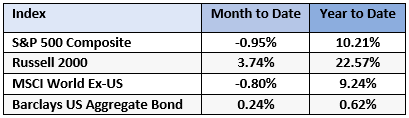
Markets had mixed results in June. US small-cap stocks did best, while bonds also increased. International and US large-cap stocks declined in value. Halfway through the year, stocks have performed favorably overall.
Portfolio Management
When most people think about investing, they naturally focus on choosing their investments. Which stocks should I own? Which funds look attractive? While investment selection is certainly important, successful portfolio management involves much more. In many ways, selecting which items to invest in is only the beginning. Like owning a vehicle, which car you buy is an important decision, but the work doesn’t stop once you drive it off the lot. To keep the vehicle operating properly, you must perform regular maintenance such as oil changes, tire rotations, and fluid checks. Investing works much the same way. The ongoing process of monitoring, maintaining, and adjusting a portfolio is what helps keep an investment strategy aligned with an investor’s goals over time.
Building the Portfolio
The portfolio management process begins with identifying investments that can work together to achieve your financial objectives. We evaluate a wide range of factors when selecting investments: diversification benefits, costs, liquidity, tax efficiency, and long-term return potential. The goal is not to find the investment that performed best recently, but rather to build a portfolio that can help you pursue your financial goals through different market environments.
Once the investments are selected, the next step is determining how much to allocate to each one. How much should be invested in stocks versus bonds? How much exposure should be allocated to U.S. companies compared to international companies? What about large companies versus smaller ones?
These allocation decisions are critically important because they help determine the overall risk and return characteristics of the portfolio, and heavily influence your long-term results. Simply put, deciding how much to own is just as important as deciding what to own.
Why Portfolios Drift Over Time
Once your portfolio has been implemented, it immediately begins to change because markets are constantly moving. Some investments outperform while others lag behind. A portfolio that was carefully designed six months ago looks different today. For example, consider an investor whose target allocation is 60% stocks and 40% bonds. If stocks experience a strong rally while bonds remain relatively flat, the portfolio could gradually shift to 70% stocks and 30% bonds. While this can be a positive development because the investor is making money, the portfolio is now also carrying more risk than originally intended. The investor may unknowingly be exposed to greater volatility than is appropriate for their goals, time horizon, or comfort level.
Rebalancing: Keeping the Portfolio on Course
Rebalancing is the process of bringing a portfolio back toward its intended allocation. This involves trimming investments that have grown beyond their target weight and adding to investments that have become underrepresented. It’s important to remember that rebalancing is not a prediction about where markets are headed, or which funds will perform best over a short time period. Rather, it is a risk-management tool designed to maintain the portfolio’s original structure and investment objectives.
Different Rebalancing Methods
Rebalancing doesn’t always mean large amounts of trading. We often have opportunities to make adjustments without significant portfolio disruption. When new money is deposited into an account, those funds can be directed toward investments that are currently below their target allocation. Similarly, when a you take a withdrawal, cash can be raised from investments that have grown beyond their target weight.
Dividend and interest payments can also create opportunities to improve portfolio balance. Rather than automatically reinvesting those distributions into the same investment, the cash may be directed toward areas of the portfolio that have become underrepresented. These cash-flow-driven adjustments can often help maintain portfolio alignment while reducing the need for additional trades. In fact, over the coming days, we will be reviewing your accounts and reinvesting this cash for you if necessary.
The Value of Ongoing Maintenance
Returning to the vehicle analogy, not all maintenance occurs during a major service appointment. Sometimes small adjustments are made along the way—adding air to a tire, topping off fluids, or replacing worn windshield wipers before they become a problem. Likewise, effective portfolio management often involves a combination of ongoing maintenance and periodic reviews. Small adjustments can be made as cash enters or leaves the portfolio, while larger reviews help address changes that occur over time.
Our goal is to maintain a portfolio that remains aligned with your financial plan. Successful investing is about building a thoughtful portfolio, monitoring it as conditions change, and making disciplined adjustments when necessary. Just as regular maintenance helps keep a vehicle running smoothly for years to come, ongoing portfolio management helps keep an investment strategy on track toward your long-term objectives.
