
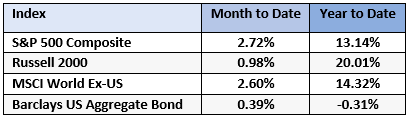
Markets rallied higher in August. US large-cap and international stocks did best, but US small-cap stocks also performed well. Bonds increased as well. For the year, stocks have dominated while bonds have trailed.
Higher for Longer?
Most people know that the US government is in debt. While this is often portrayed negatively due do the sheer amount of debt outstanding (around $40 trillion!), it’s also an asset that pays a rate of return. In fact, many investors own US government debt in their portfolios via treasury bills (maturing in one year or less), notes (maturing in 2-10 years), or bonds (maturing in 10-30 years). Around 20% of the total issuance is categorized as long-term bonds.
This graph shows the 30-year US treasury yield, which is the rate of interest the government pays (and investors receive) on long term debt over time:
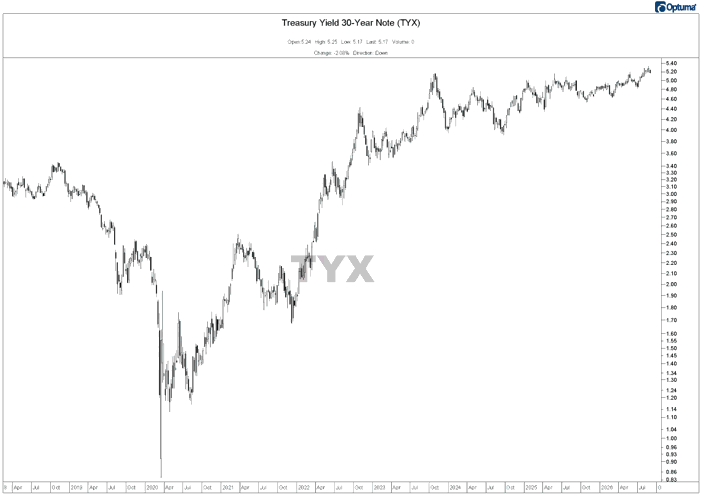
As you can see, the 30-year yield plummeted during the onset of the COVID-19 pandemic, but rose to over 5% in October of 2023. Since that time, yields moderated for about a year, before recently rising over 5% again. Rising interest rates cause the US government to pay more interest on the debt, crowding out other potential spending. On August 19th, Treasury Secretary Scott Bessent announced the government’s intention to increase the amount of long-term treasury bonds it’s buying in the open market. Doing this is an attempt to keep interest rates from rising further.
Many analysts and observers have questioned whether Secretary Bessent’s plan will ultimately achieve its objective. After all, given the huge size of the government bond market, it may prove difficult to control. Regardless of how it turns out, the level and direction of interest rates has big implications for investment markets in the following ways:
- Determining which bonds are attractive to buy – As we mentioned before, government bonds are investment options because they provide a rate of return. Because short-term bills mature quickly, they carry much less risk and their prices fluctuate much less than long-term bonds. In order for long-term bonds to be attractive investments, they should pay much higher interest rates. In recent times, a small rise in long-term interest rates can reduce the price of a bond by enough to counteract any return from the ongoing interest payments. If long-term bond yields continue to rise, they may become a more attractive option for investors.
- Stock earnings and valuations – Certain stocks perform differently depending on the interest rate environment. Companies that depend on borrowed money to finance their operations can be positively affected by lower interest rates, and vice versa. Their earnings can decline if their interest costs increase, and this can negatively affect their stock performance. Meanwhile companies that can finance operations out of current earnings are much more insulated from changes in interest rates.
- Global currency values – Different countries have different levels of interest rates based on specific factors such as inflation, economic growth, and the amount of debt outstanding. If governments decide to get overly involved in markets to keep rates low, it’s possible the value of their currency goes down instead (for example, this has happened in Japan over the last 15 years). Historically, the USA has had much more leeway than other countries to issue debt because of our strong economy, relatively stable political system, and military power. While we don’t anticipate those factors changing soon, it could be possible for global trust in the dollar to erode slowly over time. Foreign stocks and commodities look more attractive when the value of the dollar declines.
Our team consistently monitors interest rate movements, and how they affect both your current investments and any alternative options to recommend to you. If you have any questions about your current investment plan, please let us know.
